

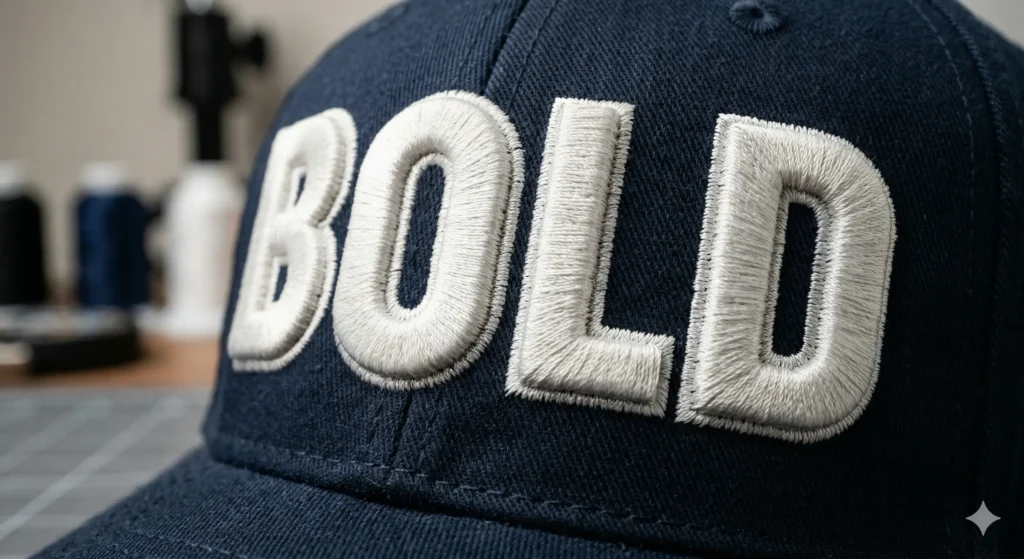
3D puff embroidery is a technique where foam is placed under the stitches to create a raised, three-dimensional effect.
It is commonly used for:
- Cap logos
- Bold lettering
- Sportswear branding
- Streetwear designs
The final result is a thick, elevated embroidery that stands out visually and physically.
What Materials Do You Need for 3D Puff Embroidery?
To get started, you need the following:
- Embroidery machine
- Puff foam (2mm–3mm thickness recommended)
- Strong thread (usually 40 wt polyester)
- Sharp needle (75/11 or 80/12)
- Stable fabric (caps, twill, structured garments)
- Proper digitized puff file
Using the right materials is essential for achieving a clean puff effect.
How to Prepare the Fabric and Hoop?
Proper preparation ensures the foam and stitches stay stable.
- Hoop the fabric tightly without stretching
- Use stable materials (caps are ideal)
- Avoid very soft or stretchy fabrics
- Ensure the design area is flat and firm
Poor hooping can ruin the puff effect.
How to Place the Puff Foam?
Foam placement is a key step in 3D embroidery.
- Place foam directly over the design area
- Make sure it fully covers the embroidery section
- Hold foam in place manually or with a light adhesive if needed
The foam must stay stable during stitching.
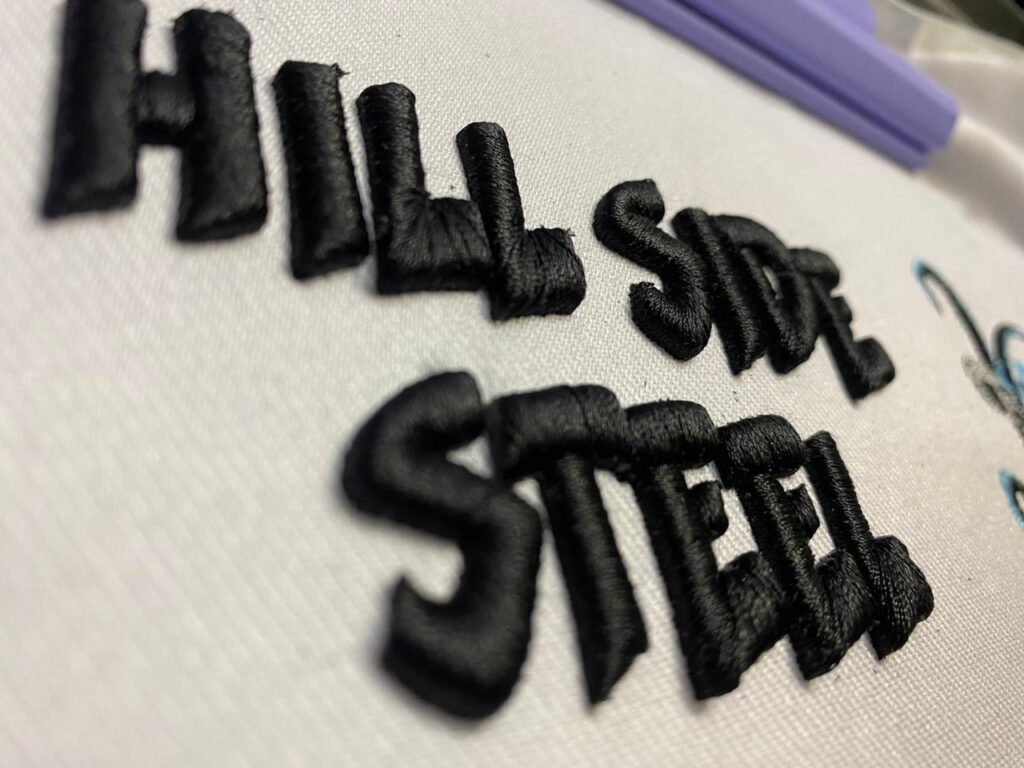
What Machine Settings Should You Use?
Machine settings need slight adjustments for puff embroidery.
- Use slower machine speed for better control
- Increase stitch density slightly for proper coverage
- Use satin stitches for best results
- Ensure strong top thread tension
Correct settings help stitches fully cover the foam.
How to Stitch 3D Puff Embroidery?
Follow these steps carefully:
- Start stitching the design over the foam
- Ensure stitches penetrate and cover the foam completely
- Allow the machine to finish the design
- Remove excess foam around the edges after stitching
The foam will tear away cleanly if digitized correctly.
How to Remove Excess Foam Cleanly?
After stitching:
- Gently tear away extra foam from edges
- Use a needle or tweezers for small areas
- Apply slight heat if foam pieces are stuck
Clean finishing gives a professional look.
Best Practices for Perfect 3D Puff Embroidery
- Use bold fonts and thick shapes
- Avoid very small or thin designs
- Maintain consistent stitch coverage
- Always test on sample fabric first
- Use high-quality foam and thread
These tips ensure clean and sharp puff results.
Common Problems and How to Fix Them
Foam visible after stitching:
- Increase stitch density
- Adjust design coverage
Uneven puff height:
- Check foam placement
- Ensure proper hooping
Thread breaks:
- Check needle and tension
- Reduce machine speed
Design not fully raised:
- Use thicker foam
- Improve stitch coverage