

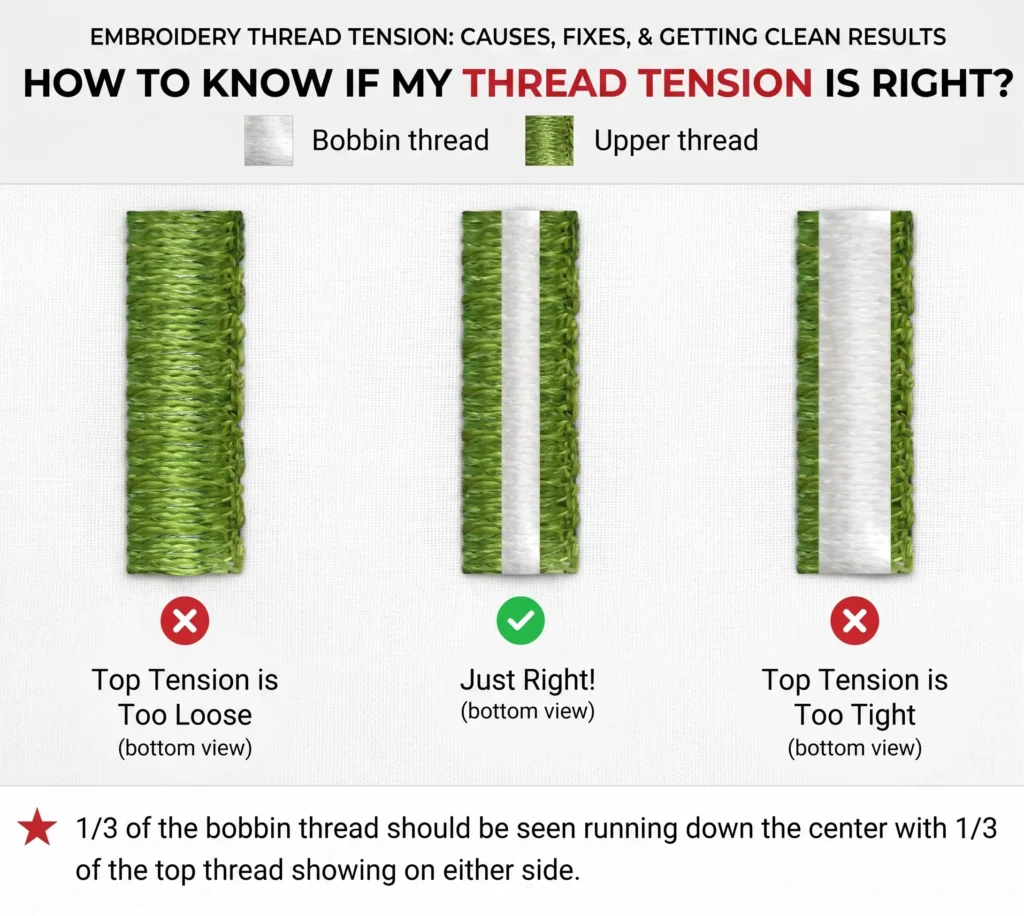
Clean embroidery depends on more than just a good design. Even when the digitizing is correct, poor thread tension can cause problems such as looping, puckering, thread breaks, uneven fills, and messy outlines. That is why thread tension is one of the most important parts of embroidery quality.
If the tension is too tight, the stitches can pull the fabric and distort the design. If it is too loose, the embroidery can look weak, loose, or uneven. In both cases, the final result suffers.
This guide explains the most common embroidery thread tension problems, what causes them, and how to fix them for cleaner results.
What Is Embroidery Thread Tension?
Embroidery thread tension is the balance between the top thread and the bobbin thread while the machine is stitching. For the design to look clean, both threads need to work together properly.
When the tension is balanced, the stitches look smooth, the design holds its shape, and the embroidery appears neat on both sides. When it is unbalanced, problems start showing quickly, especially in logos, satin stitches, and small text.
Common Signs of Thread Tension Problems
Most tension problems can be identified by the way the stitches look during or after embroidery.
Common signs include:
- looping on the top or underside
- thread breaks
- puckering around the design
- uneven stitch coverage
- bobbin thread showing on top
- top thread showing too much underneath
- distorted text or outlines
These signs can also be affected by other setup issues, but tension should always be one of the first things checked.
What Happens When Tension Is Too Tight?
When the top tension is too tight, the machine pulls the thread too strongly. This can create stress in both the design and the fabric.
Common results of tight tension are:
- thread breakage
- puckering
- bobbinthread appearing on the top
- narrow satin stitches
- pulled or distorted lettering
This is especially noticeable on lightweight fabrics and detailed embroidery where precision matters.
What Happens When Tension Is Too Loose?
When the top tension is too loose, the thread does not stay controlled during stitching. The design may complete, but the embroidery will usually look untidy.
Common results of loose tension are:
- loose loops underneath
- poor edge definition
- weak fills
- messy stitch formation
- excess top thread on the back
Loose tension often makes the design look soft and unprofessional.
Main Causes of Embroidery Thread Tension Problems
Thread tension problems often happen because of more than one issue. The most common causes are:
Incorrect machine tension settings
If the upper or bobbin tension is not adjusted correctly, the stitch balance will be off.
Low-quality or damaged thread
Poor thread may fray, snap, or feed unevenly through the machine.
Wrong needle or worn needle
A bent, dull, or incorrect needle can disturb the way thread moves through the fabric.
Incorrect threading
If the machine is not threaded properly, tension problems can appear even when the settings seem correct.
Dirty bobbin area or tension parts
Lint and thread dust can affect how smoothly the thread feeds.
Poor stabilizer support
If the fabric is not supported properly, the design may pucker and make the tension issue look worse.
Bad digitizing
Overly dense or poorly planned stitch files can create unnecessary thread stress.
How to Fix Thread Tension Problems
The best way to fix tension issues is to make small, controlled changes and test after each step.
1. Re-thread the machine
Start by checking the full threading path. A small mistake here can cause major stitch issues.
2. Replace the needle
If the needle is old, bent, or unsuitable for the thread and fabric, change it before adjusting too much else.
3. Clean the machine
Remove lint from the bobbin case, hook area, and thread path.
4. Test the tension gradually
Adjust the top tension in small steps. Avoid large changes, because they make troubleshooting harder.
5. Check the bobbin
Make sure the bobbin is wound evenly and inserted correctly.
6. Review stabilizer and fabric
If the fabric is shifting or wrinkling, better support may be needed along with tension correction.
7. Test on similar material
Always run a test design on fabric similar to the final garment before production.
Why Bobbin Tension Matters Too
Many people focus only on upper tension, but bobbin tension also affects stitch balance. If the bobbin is too loose or too tight, the top and bottom threads will not lock properly inside the material.
Bobbin tension is not adjusted as often as upper tension, but it should be checked when problems continue after normal top-thread corrections.
Thread Tension in Small Text Embroidery
Small text is one of the first places where bad tension becomes obvious. Letters can close up, lose shape, or look uneven very quickly.
For small text embroidery, clean results depend on:
- balanced tension
- correct needle size
- proper stabilizer
- quality digitizing
- suitable text size
Even a slight tension issue can reduce readability in small lettering.
Thread Tension in Cap Embroidery
Cap embroidery is less forgiving than flat garments because of the curved surface and structured front panel. If the tension is off, you may see:
- uneven coverage
- thread breaks
- poor edge quality
- distorted shapes
- messy puff coverage on raised designs
That is why cap embroidery should always be tested carefully before final production.
How to Prevent Tension Problems
The easiest way to avoid embroidery tension issues is to keep your setup consistent and maintain good production habits.
Useful steps include:
- use quality embroidery thread
- change needles regularly
- keep the machine clean
- choose the right stabilizer
- avoid overly dense files
- test before stitching final garments
- make only small tension adjustments
These habits reduce errors and improve stitch consistency.
Final Thoughts
Embroidery thread tension has a major effect on stitch quality. When it is balanced correctly, the design looks cleaner, smoother, and more professional. When it is not, even a good design can end up with looping, puckering, breakage, or uneven coverage.
The best results come from checking the full setup, not just the tension setting alone. Thread, needle, stabilizer, fabric, and digitizing all work together. Once that balance is right, the embroidery quality improves significantly.
Conclusion
Thread tension problems are common, but they are fixable. By learning the warning signs and checking your setup step by step, you can prevent many of the most frustrating embroidery issues.
Whether you are working on logos, caps, or detailed text, balanced tension helps produce cleaner and more professional embroidery every time.